

Choose a mood before choosing products
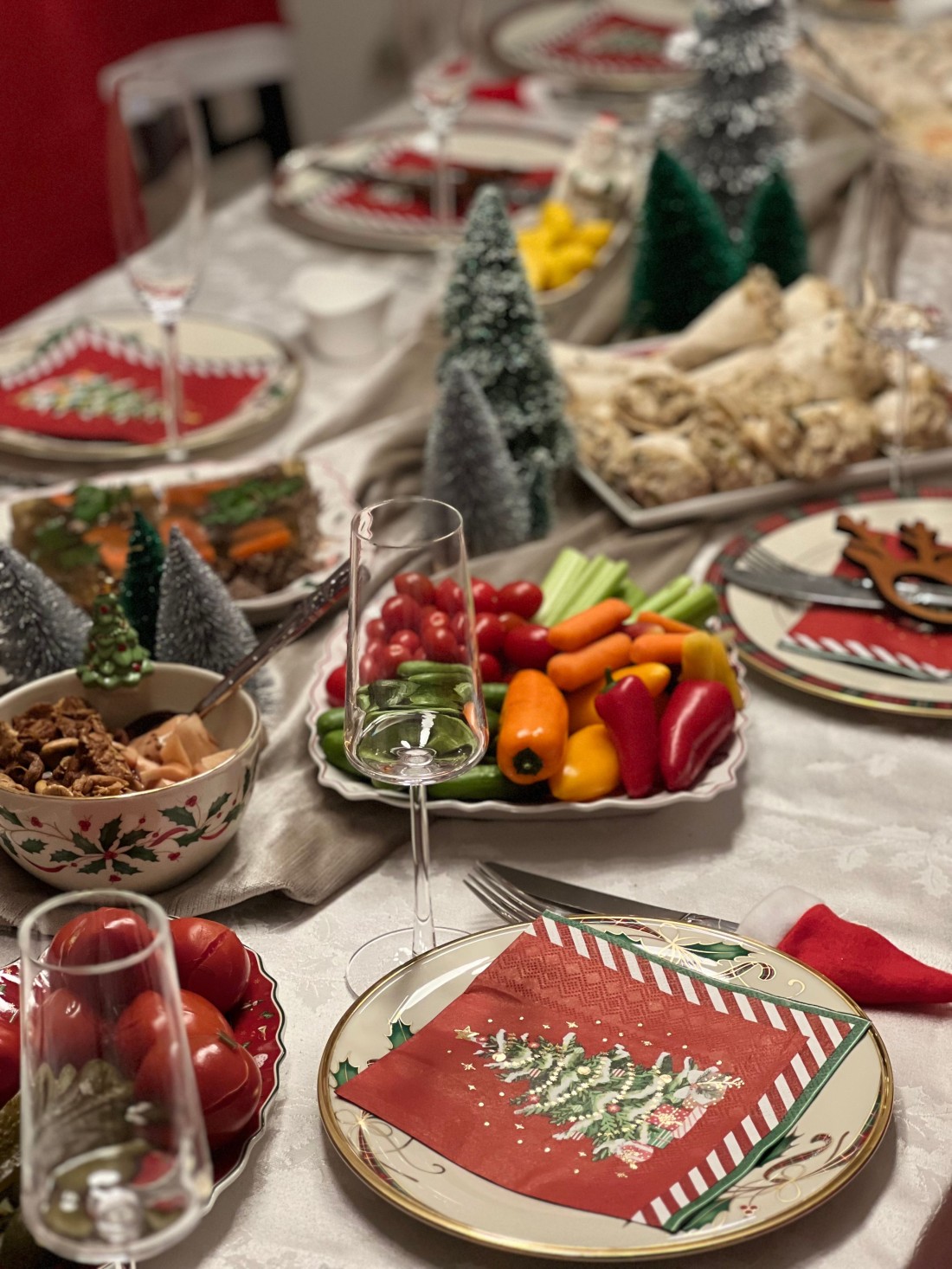
Begin with three words that describe the evening. For this design, use warm, nostalgic, and polished. Translate those words into a palette of deep red, evergreen, and ivory, with small touches of brushed gold.
Let ivory provide breathing room through the tablecloth and larger surfaces. Use evergreen to anchor the arrangement, then bring in red through napkins, ribbon, or printed details. Reserve gold for a few accents so its reflection feels deliberate.
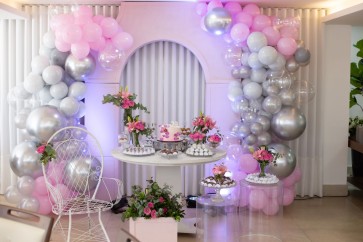
If your home already has strong colors, work with them. A pink room can support a cranberry-and-blush Christmas scheme; a cool gray dining area might suit silver, white, and icy blue. The most convincing party design responds to its setting.
Give the room one main focal point
Choose the place you want guests to notice first: a dessert table, a mantel, or the wall behind the dining table. Build your largest decorative moment there.
For a dessert table, combine an ivory backdrop, a gathered evergreen garland, and one oversized red bow. Arrange a few paper fans or honeycomb decorations nearby to add depth. A modest balloon cluster on one side can soften the outline without enclosing the entire display.
Leave space around the main feature. A focal point reads more clearly when surrounding surfaces are calmer. Before adding another decoration, look at the whole room from the entrance.
Build a table in layers
Start with the foundation: a clean table covering and a runner or loosely arranged ribbon. Add a dinner plate, a smaller dessert plate, and a contrasting napkin. When the plate carries a detailed pattern, give it a quieter companion.
Keep the centerpiece low enough for guests to see one another. Small vessels, compact greenery arrangements, and scattered ornaments can create rhythm without forming a barrier. If the table is narrow, move the larger decorations to the sideboard and give serving dishes the space they need.
Add a handwritten place card or a small favor at each setting. A paper star tied to a napkin can feel just as considered as a more elaborate ornament. Repeat the same detail across the table to make it look intentional.
Design the evening around movement
Guests should be able to enter, set down belongings, collect a drink, and join the party without crossing a busy serving area.
Place the drinks station away from the entrance and separate it from the main food queue where space permits. Set cups, napkins, and garnishes in the order guests will use them. Leave a clear landing area for filled drinks.
A hot chocolate station can become a decorative feature of its own. Use coordinated labels, a tray of toppings, and a small festive sign. Position hot liquids on a stable surface with an adult managing service when children are present.
Use light to bring the scheme together
Test the room after sunset. Decorations that look rich in daylight may become dull under a single overhead light.
Combine table lamps, suitable decorative string lights, and battery-operated candles to spread a gentle glow. Keep the dining area bright enough to eat comfortably and the buffet bright enough to read labels. Avoid strongly colored lighting near food if you want dishes and tableware to retain their natural appearance.
Take a photograph from the guest's viewpoint. It often reveals an exposed cable, an awkward gap, or a centerpiece that feels too tall.
Add one activity that belongs to the theme
An ornament-writing station gives guests something personal to do. Provide paper ornaments and pens, then invite everyone to write a wish or favorite memory. Display the finished pieces on a small tree or let guests take them home.
For a seated dinner, place a conversation prompt beneath each napkin. Choose questions people can answer comfortably, such as a favorite holiday dish or a memorable winter trip.
The activity should fit naturally into the evening. Guests need time to enjoy one another as much as the decorations.
Set up in a practical order
About two weeks before the party, confirm guest numbers, measure the focal area, and check what you already own. Order the missing items and test one complete place setting.
The day before, install the backdrop, prepare signs, and arrange the table elements that can safely stay out overnight. On the day, finish food displays, check lighting, clear walkways, and photograph the room before guests arrive.
Begin your shopping list with the essentials: coordinated tableware, a table covering, one focal decoration, lighting, and a personal finishing detail. Those choices will establish the atmosphere and help every later purchase earn its place.




Validate your login